
Wilmington City Directory Runs
Wilmington's historical directory trail is unusually broad, but it is not a yearly roll. The New Hanover County Public Library's Historic Homes material identifies a visible span from 1860 through 1963. DigitalNC supplies scans for many years, while the Local History Room holds related indexes and in-room material. The earliest visible run is Kelley’s 1860-61 directory. Other runs include the 1865-66 Wilmington Directory, Smaw’s 1867 volume, Haddock’s 1871 directory, Sheriff volumes in the 1870s, J. L. Hill and Hill Directory Company editions, and later Wilmington volumes through 1963. A blank year can reflect an irregular publishing schedule, an unscanned volume, an abbreviation, or a changed address. It is not proof that a person left town.
| Collection | Years | Where held | Access |
|---|---|---|---|
| Wilmington city directories | 1860-1963 visible span | DigitalNC and Local History Room | Scans and in-room copies |
| Souther name, address, and profession index | 1897-1905 | DigitalNC and New Hanover County Public Library | Free finding aid, then verify the scan |
| Bill Reaves Block Books | 1860-1930s clippings, with other years present | Local History Room | In-room, arranged by address and block |
| Wilmington newspapers | 1799-1948 title-specific runs | NC Archives, library, NCLive, and DigitalNC | Microfilm and digital access vary by title |
| Federal census | 1790-1950 public | National Archives and partner access | Schedules follow the 72-year rule |
DigitalNC’s 1897-1905 Wilmington directory index is a useful first pass for a name, street, profession, or address.
The index points to a page in the scanned directory. It does not replace the page, where spelling, headings, and symbols need to be read in context.
Wilmington Directory Timeline
Directory publication changed hands and cadence over time. That history gives a practical way to set a search window instead of assuming every year exists. The listed run begins with 1860-61, moves through several nineteenth-century publishers, and becomes more regular in parts of the twentieth century. The 1897, 1900, 1902, 1905, and 1907 Hill-era material is especially useful because the library also provides a street-index project for that period. Later runs include 1909-14, 1917-20, 1922, 1924, 1926, 1928, 1930, 1932, 1934, and a visible 1963 endpoint.
- 1860-61: Kelley’s Wilmington Directory provides the early visible starting point.
- 1865-80: Wilmington, Smaw’s, Haddock’s, and Sheriff volumes offer uneven postwar coverage.
- 1897-1907: Hill-era directories align with the library’s searchable street-index project.
- 1909-34 and 1963: later runs supply selected continuity, not a guarantee of a volume for every year.
DigitalNC’s 1900 Wilmington directory record shows the kind of volume that should be checked beside its neighboring years.
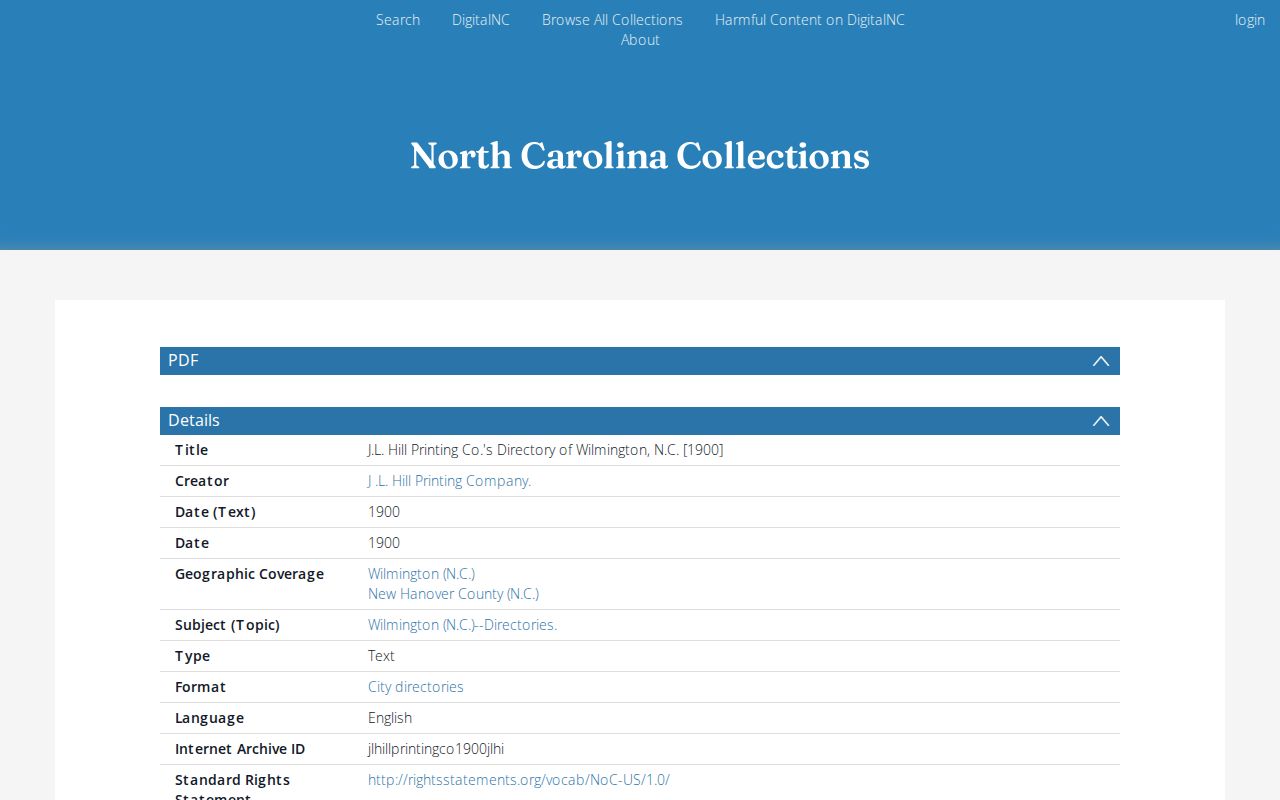
A finding in 1900 can be compared with 1897, 1902, 1905, and 1907 before drawing a conclusion about a move or a changed name.
Wilmington Local History Room
The Local History Room is the essential fallback when a scan, name index, or general web search does not settle a directory question. Its Lower Cape Fear collection covers New Hanover, Pender, and Brunswick, plus material tied to former New Hanover boundaries. Materials do not circulate and are examined in the room. The room lists Monday through Thursday hours of 10 a.m. to 7 p.m. and Friday through Saturday hours of 10 a.m. to 5 p.m., with Sunday closed. Call 910-798-6305 before a special visit, especially for maps or large collections that may need 24 to 48 hours of retrieval.
Readers have microform equipment, a ScanPro 3000 for microfilm and microfiche, a ScanSnap V600 for larger items, and copying or scanning options. The rules matter: use pencils, handle one box or volume at a time, keep food and drinks out, and follow photo and copyright limits. Black-and-white copies are listed at 10 cents and color copies at 30 cents. Those details make the room a research stop, not merely a shelf behind a desk.
The New Hanover Local History Room describes its visitor rules, equipment, collecting scope, and current contact route.
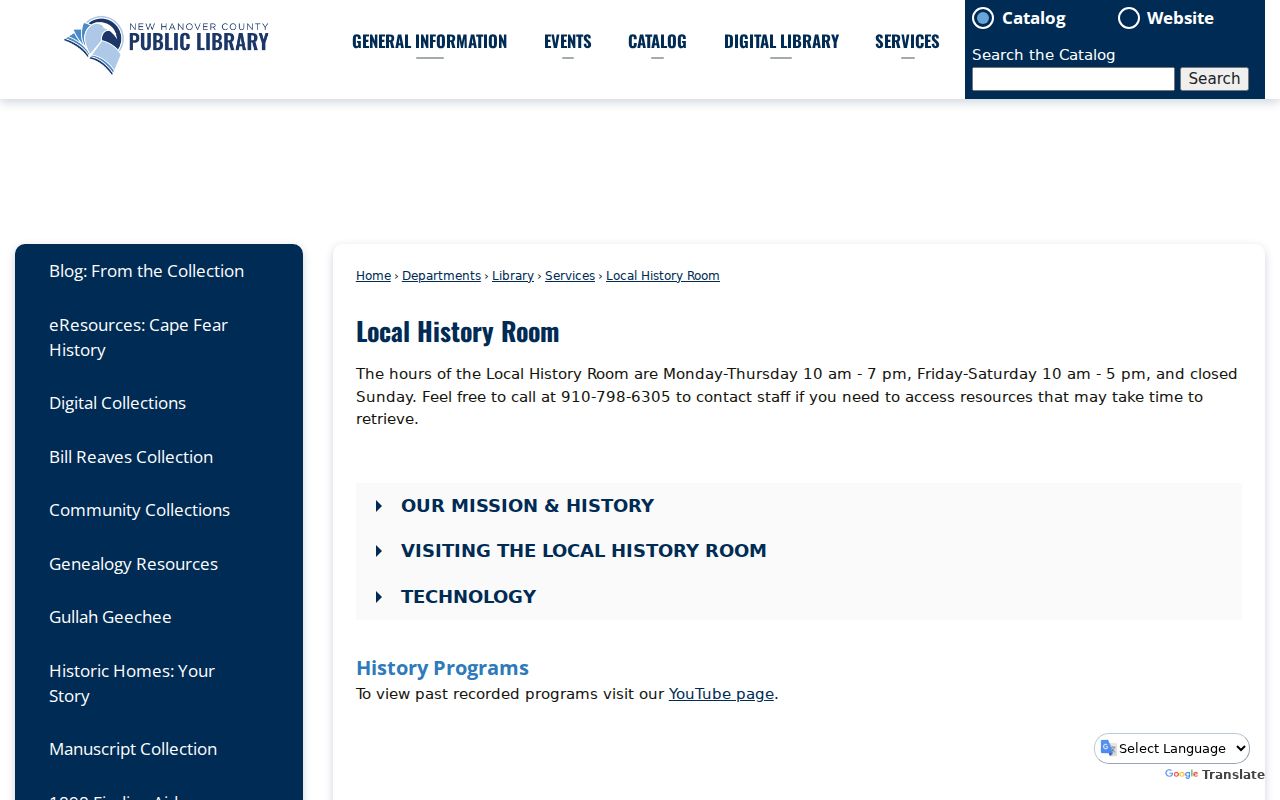
For a missing directory interval, staff access and the room’s noncirculating collections can be more useful than repeating the same online search.
Wilmington Directory Names
Names in a Wilmington printed directory deserve a deliberate variant pass. Initials, married or maiden surnames, street abbreviations, punctuation, and articles can all change the result. The 1897-1905 Souther compilation includes names, businesses, professions, addresses, and listed race, but its index entry remains a lead rather than final proof. Old printed material can shorten a given name or place an entry in a different section from the one expected. Search the alphabetical listing and the street listing where available, then compare the street number and cross street.
The same habit helps when a directory lead moves into a deed search. The Register of Deeds' pure-alpha search removes spaces, punctuation, and special characters, and names beginning with And, An, or The may appear with or without the article. That is a Wilmington-specific quirk worth recording in a research note. A name that seems absent may simply be indexed under a different form.
Reading Wilmington City Directory Entries
A directory entry is a dated clue, not a complete biography. The inspected 1924 street section uses a street heading, individual street numbers, occupant names, and cross-street or intersection context. The alphabetical part and front matter may add other details. An asterisk appears in the sample, but its exact meaning must be read from that volume’s own key. Do not carry a symbol’s meaning from one publisher or year into another. Many directories also have street indexes, so a surname can be tested from both directions.
| Street heading | Groups the listing by street; the inspected 1924 sample includes a WOOD section. |
|---|---|
| Street number | Places an entry along the printed street, sometimes beside cross-street context. |
| Occupant names | Shows one or more names in the street-listing section. |
| Status symbol | May appear beside an entry; check that year’s front matter before assigning meaning. |
| Business or trade detail | May appear in the alphabetical or front sections rather than every street listing. |
- Criss-cross directory
- An address-first or street-ordered arrangement used to find entries by location rather than surname.
- Householder index
- An alphabetical name arrangement that can be paired with a street listing to test an address.
- Abbreviation key
- The publisher’s explanation of marks and shortened words, usually in the volume’s front matter.
Use the 1924 Wilmington street-listing scan to inspect the printed context before interpreting an address-based result.
Wilmington Directory Block Books
The Bill Reaves Block Books make Wilmington’s address research different from a simple alphabetical directory search. They are bound newspaper clippings arranged by address, block, and street, while a companion family-name file is arranged by surname. The Historic Wilmington Foundation guide illustrates the approach with a page headed “408 Block Dock Street.” Depending on the clipping, an address can lead to residents, construction notices, civic events, naval service, or business activity. The Block Books are not online according to the guide, so they belong in an in-person request plan.
Use the address as printed in the volume, then try the street name, nearby intersections, an owner surname, and the Reaves block heading if the number does not work. That approach is also safer for early houses that had no number or later received a changed postal number. The books provide a source trail to test against a directory scan, rather than an automatic answer about every person associated with a block.
Wilmington Directories and Census
Pair a directory year with the nearest public federal census to turn one listing into a household trail. Federal population censuses were taken every ten years from 1790, and the 72-year access rule makes 1950 the newest public census. For Wilmington, the research sequence pairs 1897 with 1900, 1907 or 1909 with 1910, 1917 or 1920 with 1920, 1924 or 1926 with 1930, and 1934 with 1940. A 1963 entry needs later non-census sources because the public census sequence ends at 1950.
- Choose a directory year and copy the exact name, address, cross street, and any printed mark.
- Check the alphabetical section against the street section and record any variation.
- Use the nearest census to compare household structure, age, birthplace, and relationship information.
- Test adjacent directory years, then use newspapers or an obituary to explain a move, death, or changed listing.
An old listing that needs a present-day record check can be carried into the Wilmington resident lookup workflow, where the modern source limits are treated separately.
Wilmington Newspaper Gaps
Newspapers often bridge the interval between two directory runs. The North Carolina Archives identifies Wilmington titles beginning with the Gazette in 1799, the Journal in 1844, the Post and Daily Post in 1867, the Messenger in 1887, and the Morning Star in 1909. Each title has its own dates, changes, and suspensions. A newspaper notice can supply a death, marriage, business address, construction event, civic appointment, or other dated context, but it should be linked back to the directory year and street rather than read alone.
The Daily Record is an important local exception to a one-paper search. Rare copies of the paper edited by Alexander Manly survived after its press was destroyed during the 1898 white-supremacy campaign; Cape Fear Museum conserved material and UNC’s NC Digital Heritage Center digitized it. That preservation story explains why multiple archive paths matter when a Wilmington printed directory leaves a gap.
New Hanover Public Library’s digital archives bring together local photographs, maps, newspaper articles, letters, and family material.
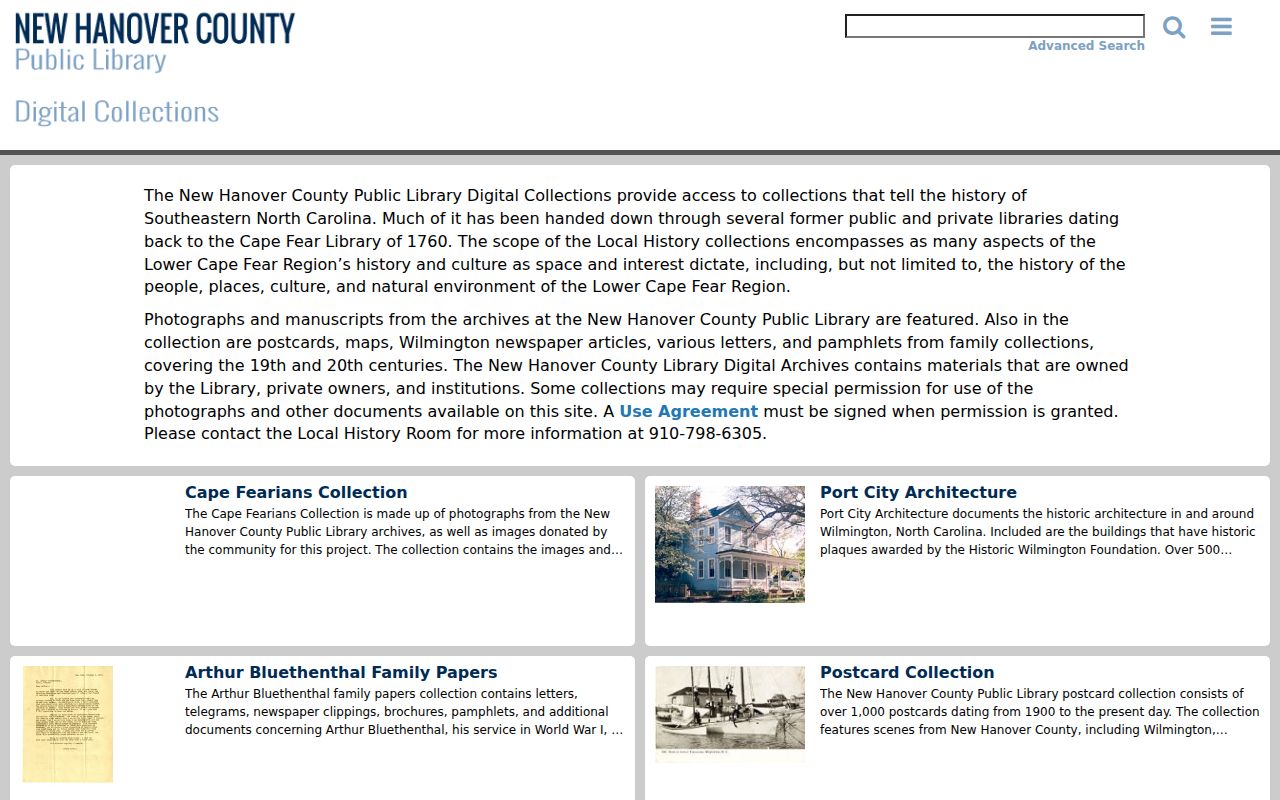
These materials can supply context for a name or address, but a digital item’s rights and use conditions may differ by collection owner.
Wilmington Directory Companions
Directory research becomes stronger when the source fits the question. The Local History Room’s Historic Homes method joins deeds, tax records, street indexes, Sanborn maps, newspapers, census schedules, obituaries, family files, and military material. Sanborn maps can show a building footprint, material, stories, chimneys, external structures, and nearby streets. The Lower Cape Fear Historical Society’s Ida B. Kellam Archive holds directories, late-nineteenth- and early-twentieth-century Sanborn maps, house and block files, oral histories, and Bulletin issues. Its research is by appointment, with remote help listed at $20 per hour plus copying and mailing.
Cemetery and obituary sources can close a trail. The library links Pine Forest Cemetery’s digitized register, Oakdale’s known-burials database, and Bellevue records that include Register A and B entries from July 1876 through May 1988. The county cemetery layer maps known abandoned or neglected plots only, so it is not a full burial index. These are companion sources, not reasons to turn a directory absence into a conclusion.
New Hanover genealogy resources connect the city-directory trail with cemetery, local-history, deed, and regional archive options.
When a scan, index, and archive record agree on the same place and period, the resulting Wilmington history is far more dependable than any single listing.