
Finding Wilmington Residents Through Records
Wilmington has no single roll of every person who lives in town. The most useful route depends on the question. The New Hanover tax record is usually the first stop for a parcel or a current owner. The state voter search can confirm a registration connection. Recorded deeds trace parties to property, and the library’s older directories place households in a particular period. A court index can establish a case connection, but it cannot turn a name into a full personal profile.
Each result needs a second check. Property ownership is not the same as occupancy. A voter record is not a complete household list. A name in a deed can be a buyer, seller, trustee, or another party. Start with the record that fits the known name, street, or year, then retain the parcel ID, book and page, case number, precinct, or directory page that lets the result be checked again.
- Use the county property search when a Wilmington address, parcel, or owner name is known.
- Check the state voter lookup for registration details, using the person’s name and a year of birth filter where needed.
- Search the Register of Deeds as grantor or grantee for a recorded document trail.
- Use eCourts for public case summaries, then ask the Clerk for official or older files.
- For a past household, compare a city-directory entry with newspapers, census material, deeds, or a local-history collection.
Note: A no-result is a search outcome, not proof that a person never lived in Wilmington or that a restricted record does not exist.
Wilmington Property Names by Address
The New Hanover County property search accepts Owner, Address, Parcel ID, and Advanced modes. It is an efficient way to move from a Wilmington street number to a parcel and the name carried on the tax record. The portal reports ownership and sale data, property characteristics, assessed and taxable values, and address fields. County guidance says ownership, sale date, sale price, and property-characteristic information updates weekly, while personal property updates annually as of January 1.
A tax card has two important address fields. The situs or property location is where the parcel sits. The mailing address is where tax correspondence is sent. Record both, but do not treat either field alone as proof of who occupies the structure. A trust, estate, company, or several owners can appear on one parcel. The full street-by-street sequence belongs in the Wilmington streets directory.
The county property-search screen shows the available Owner, Address, Parcel ID, and Advanced paths.
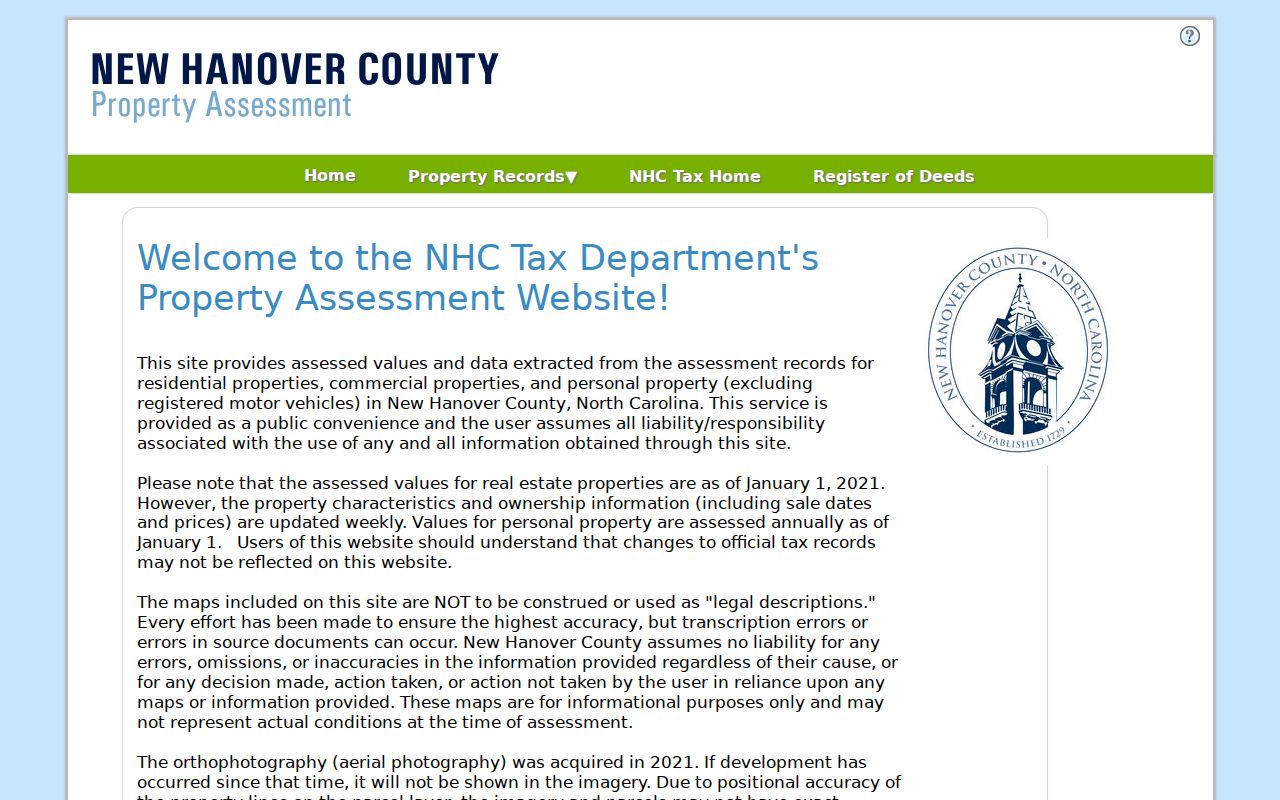
Those separate paths matter because a name, street number, and parcel identifier often produce different useful starting points in Wilmington research.
Wilmington Voter Registration Checks
The North Carolina Voter Search asks for first name and last name, with optional middle initial, birth-year, county, and status filters. A result can show registration details, jurisdictions, polling place, a sample ballot when available, absentee information, and voter history. It does not show a person’s ballot choices. Select New Hanover County when a Wilmington connection is the question, but test spelling and status choices before reading a non-match as meaningful.
Public list production can contain fields such as name, residence and mailing address where maintained, party affiliation, registration date, precinct, districts, status, and voter history. Full dates of birth, Social Security numbers, driver-license information, signatures, and protected addresses are not ordinary public-result fields. The Board of Elections is also the route for a defined report or map request when an individual lookup does not answer a civic-record question.
The voter lookup interface uses name and filter controls rather than a broad household search.
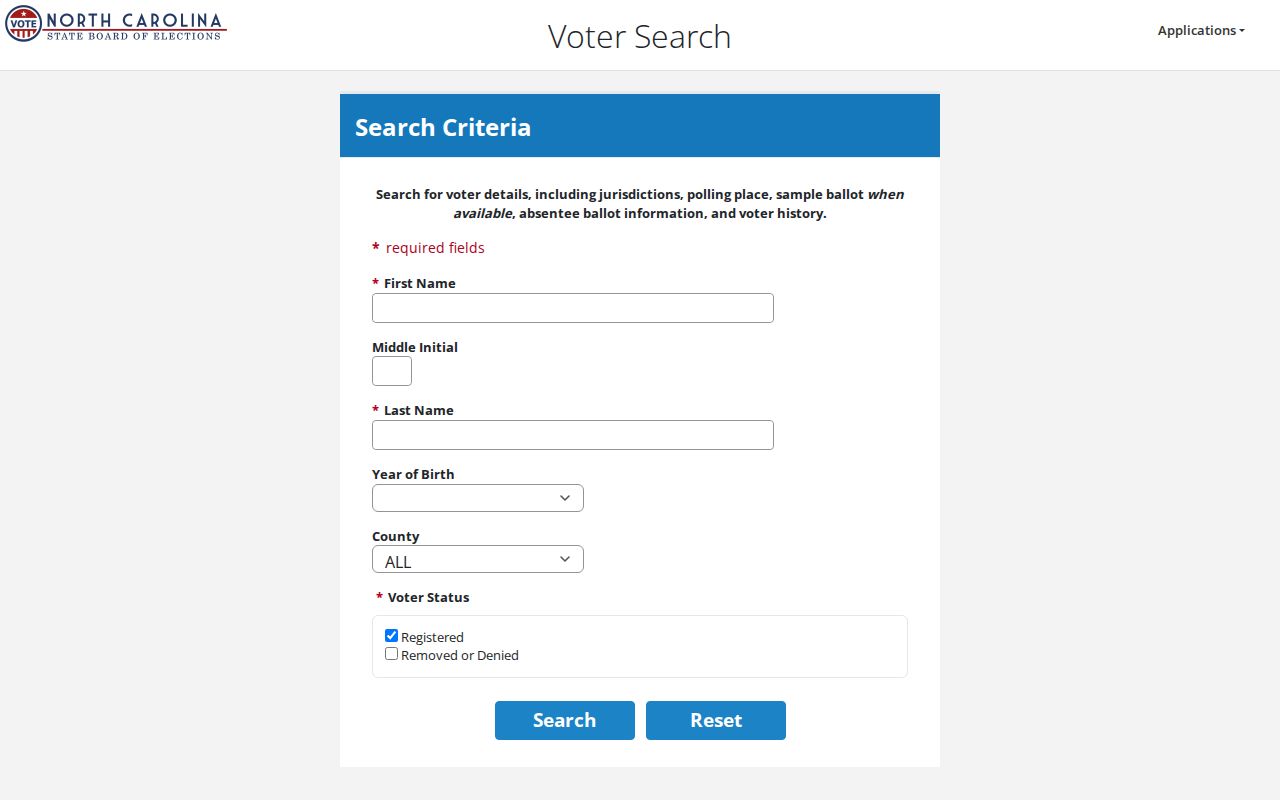
Its required name fields and status selection help keep a Wilmington voter query narrow and verifiable.
Wilmington Offices Holding Resident Clues
Wilmington is the New Hanover County seat, so the city, county, and state hand off different parts of a resident trail. The Register of Deeds holds recorded instruments. The Tax Department maintains the real-property ownership index. The Board of Elections administers local voter records. Courts are served by the county Clerk and the statewide portal. The city’s Clerk routes city public-records requests and keeps council, appointment, and official-file material, but city staff and board listings are civic records, not a resident roll.
New Hanover Register of Deeds
320 Chestnut Street, Suite 102
Wilmington, NC 28401
910-798-4530
New Hanover Tax Department
230 Government Center Drive, Suite 190
Wilmington, NC 28403
910-798-7300
New Hanover Board of Elections
226 Government Center Drive
Wilmington, NC 28403
910-798-7330
For a city file that is not online, Wilmington’s public-records form asks for a specific description of existing records and allows inspection, electronic copy, or paper copying. The form invokes Chapter 132, and staff may require a signature or charge under the city fee schedule.
Wilmington Deed Searches Need Variants
The New Hanover Register of Deeds index connects names to deeds, liens, plats, easements, and other recorded instruments. It offers Standard, Full Text, Sounds Like, and Starts With searching, Date or Name sorting, and human or company entity choices. A searcher can enter grantor or grantee names, dates, book and page, instrument or file number, or a property description such as subdivision, lot, block, map, phase, unit, and free-text description.
A local quirk changes name searching. The office says pure alphabetic searches omit spaces, punctuation, and special characters. Names beginning with And, An, or The may appear with or without that article. Try likely spelling variants and keep the actual document in view when a result matters. The online index warns that entries may be partial or lag the office computers, even though office land records reach into the 1700s.
| Register search field | Useful Wilmington use |
|---|---|
| Grantor or grantee name | Follow a buyer, seller, lender, trustee, or other recorded party. |
| Start and end dates | Limit a broad surname to a known ownership or event period. |
| Book, page, instrument, or file | Return to a specific document cited by a tax card or another deed. |
| Subdivision, lot, block, map, or unit | Search the legal description when postal numbering is uncertain. |
The recorded-document search illustrates its name, date, and document-reference controls.
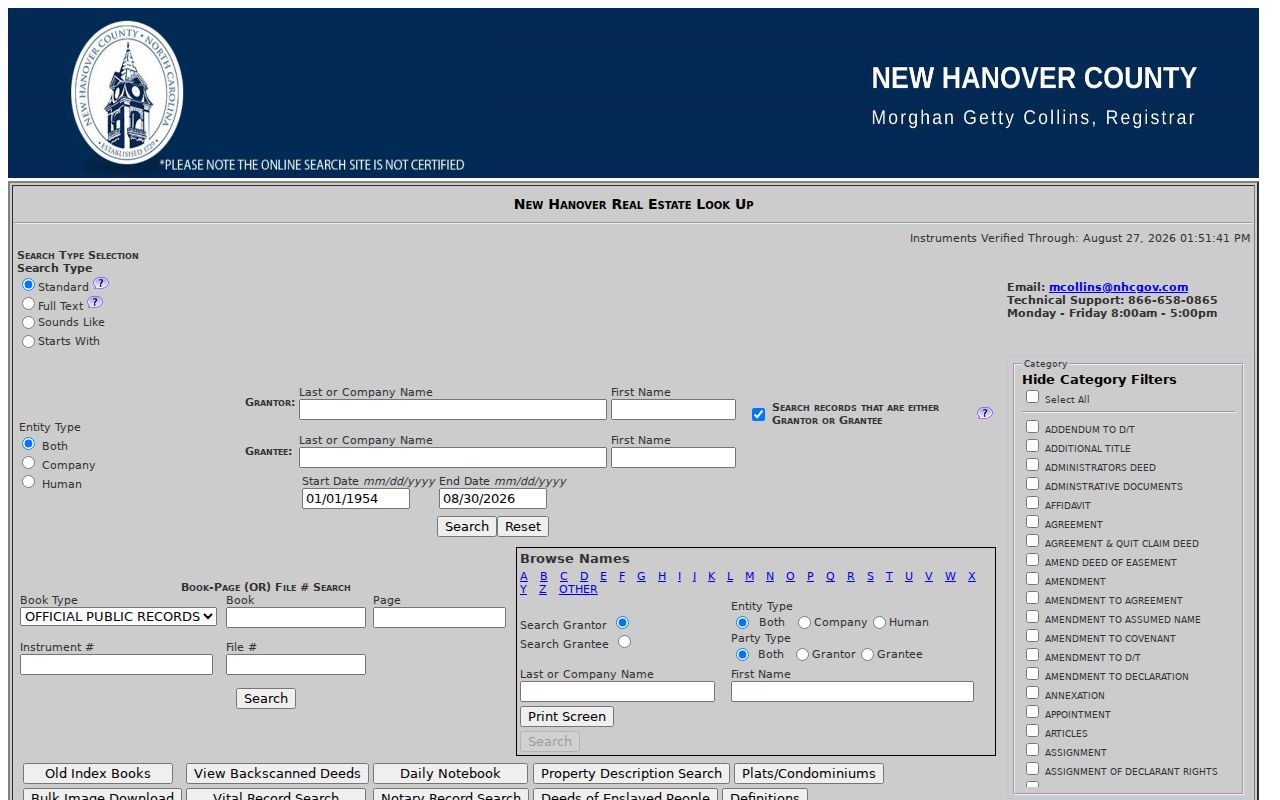
Use the index to find a document path, then consult the office for an image, certified copy, or older material that the web index does not fully show.
Wilmington Court Names and Case Context
The North Carolina eCourts Portal is the public summary route for New Hanover civil, criminal, estate, special-proceeding, and family case activity. A party search can produce a case number, type, status, filing date, hearings, dispositions, and judgments. It is useful when the record question concerns a filed case or an estate, not when the goal is to establish a person’s current address.
New Hanover eCourts went live in February 2025, and the state reported full statewide implementation in October 2025. Older paper files, certified copies, and complete court-file access remain with the New Hanover Clerk of Superior Court. Sealed, expunged, juvenile, victim, and other confidential matters do not become public merely because a portal exists.
The eCourts Smart Search screen is a useful reminder that a party-name result supplies case context, not a biography.
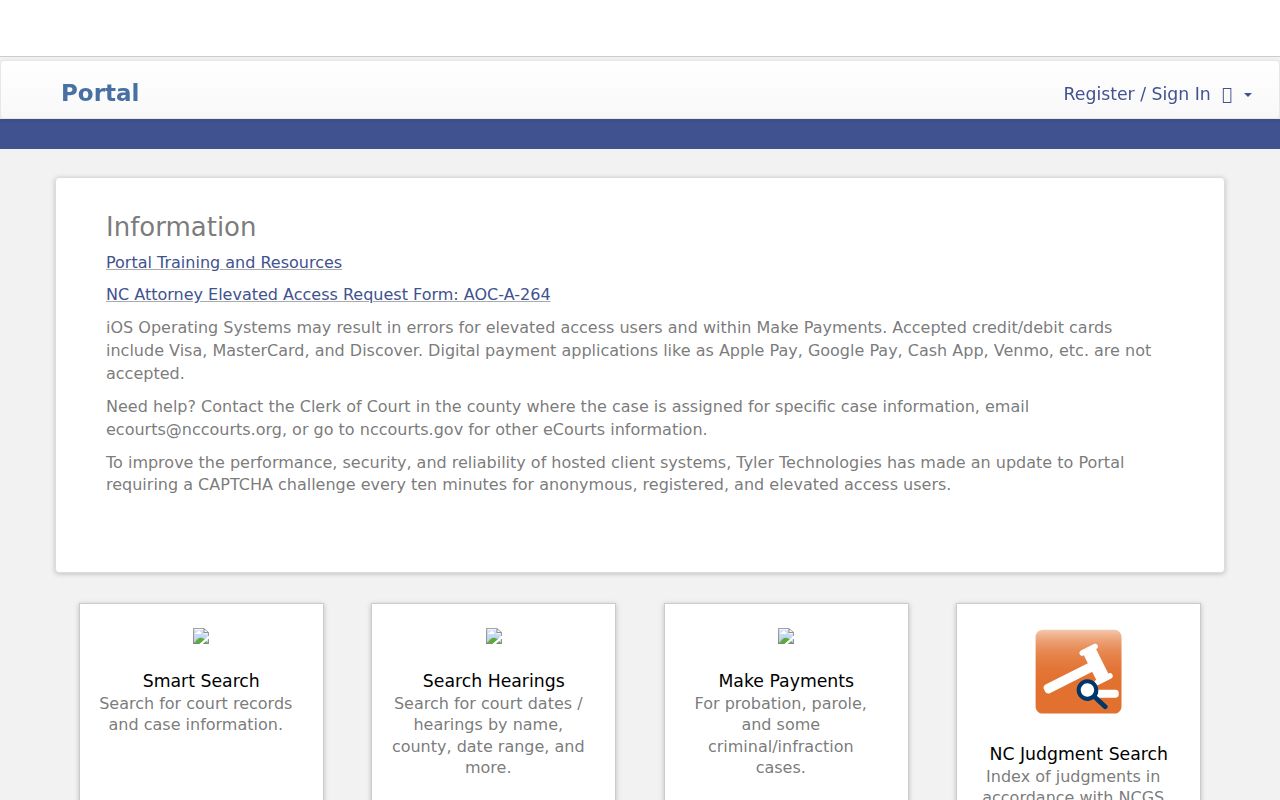
Keep the case number and ask the Clerk for the official file when a record needs to be verified.
Current Wilmington Residents Directory Sources
Current Wilmington resident evidence is scattered among specialized records. The sources below identify different roles, not a complete population. Use the keeper that matches the question and respect the boundary between an owner, a registered voter, a named document party, and a public official. The Wilmington resident lookup is more useful when one name needs verification across several of these records.
| Wilmington source | What it may establish | Custodian | Access route |
|---|---|---|---|
| Tax property record | Current owner, parcel, situs, mailing address | New Hanover Tax Department | Free owner, address, parcel, and advanced search |
| Voter registration | Registration, precinct, jurisdictions, voter history | State Board and county Board of Elections | Individual lookup or defined report request |
| Recorded-document index | Grantors, grantees, legal descriptions, instruments | Register of Deeds | Free index; office for document verification |
| City staff and boards | Public officers, appointed members, official contacts | City Clerk and departments | Department directory, agendas, minutes, request route |
| Business registration | Entity status, officers, agent, filing context | North Carolina Secretary of State | Interactive public business search |
A public source may be current, historical, or narrow in scope. Comparing two independent sources is more reliable than stretching one record beyond what it records.
Wilmington Vital Record Custodians
Birth, death, marriage, and divorce questions require the right custodian. New Hanover’s Register of Deeds and local registrar issue local birth and death copies, while the Register of Deeds handles marriage-license copies. North Carolina Vital Records maintains statewide records and issues certified copies. Divorce certificates come from the Clerk where the case was filed or from the state route. State holdings listed in the research begin with births in 1913, deaths in 1930, marriages in 1962, and divorces in 1958.
There is no verified blanket 100-year or 50-year rule for current North Carolina access. N.C. Gen. Stat. §130A-93 controls restricted birth information and certified-copy eligibility. A certified copy may require identity, relationship, or another statutory basis. An uncertified copy is generally available only subject to the same restrictions. A person’s name in a directory or deed does not override those limits.
The state Vital Records answers describe holdings and eligibility questions.
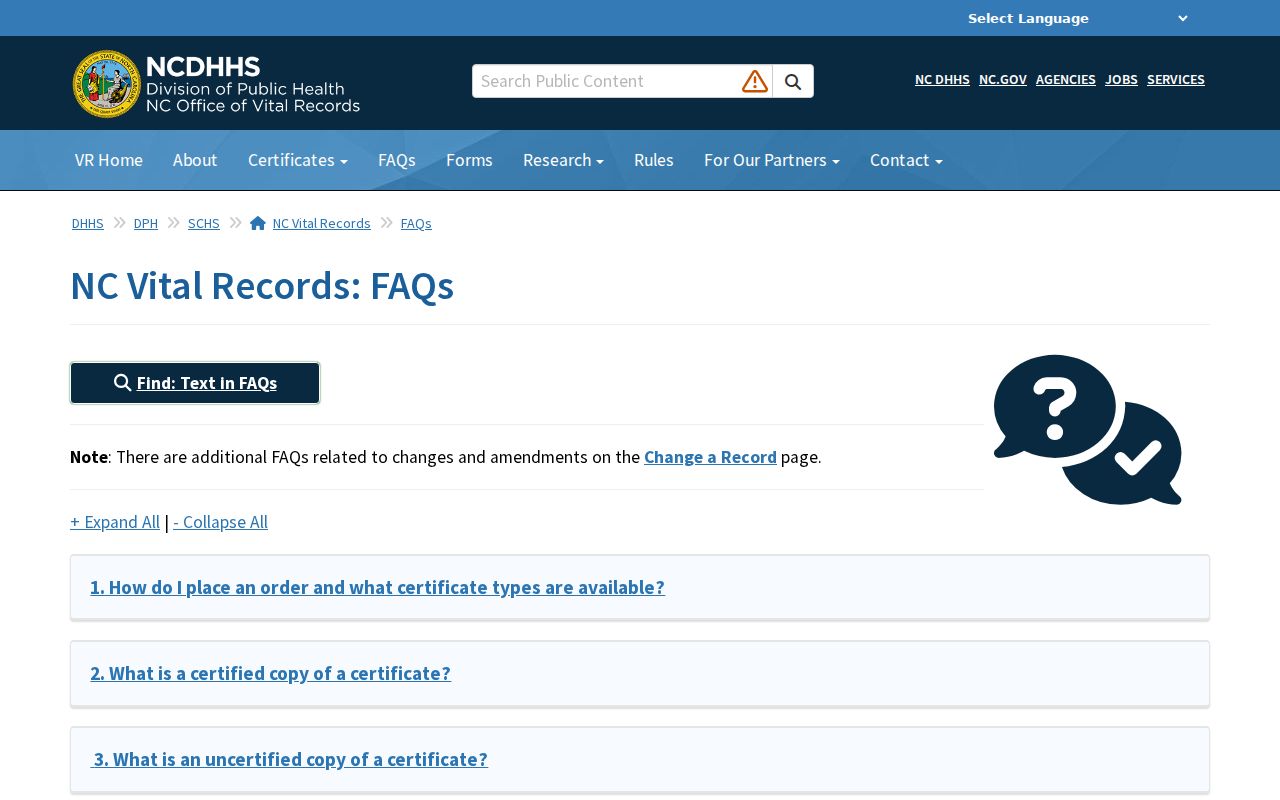
Confirm the event type and custodian before ordering, because a local marriage copy and a state birth certificate follow different routes.
The state ordering route shows the event, place, date, relationship, identity, and payment information needed for an official request.
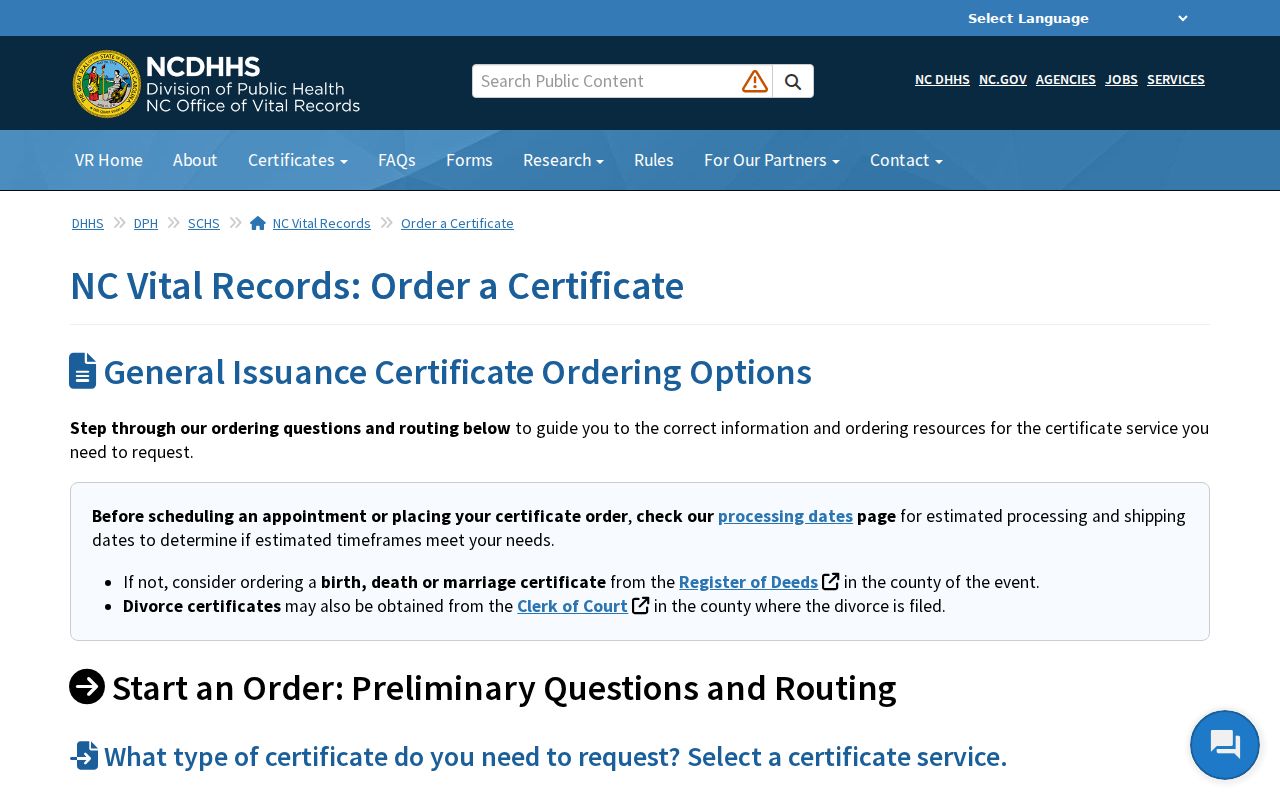
That ordering path is for a legally available record, not a substitute for the local historical collections used to trace a former household.
The North Carolina Vital Records service identifies the statewide custodian.
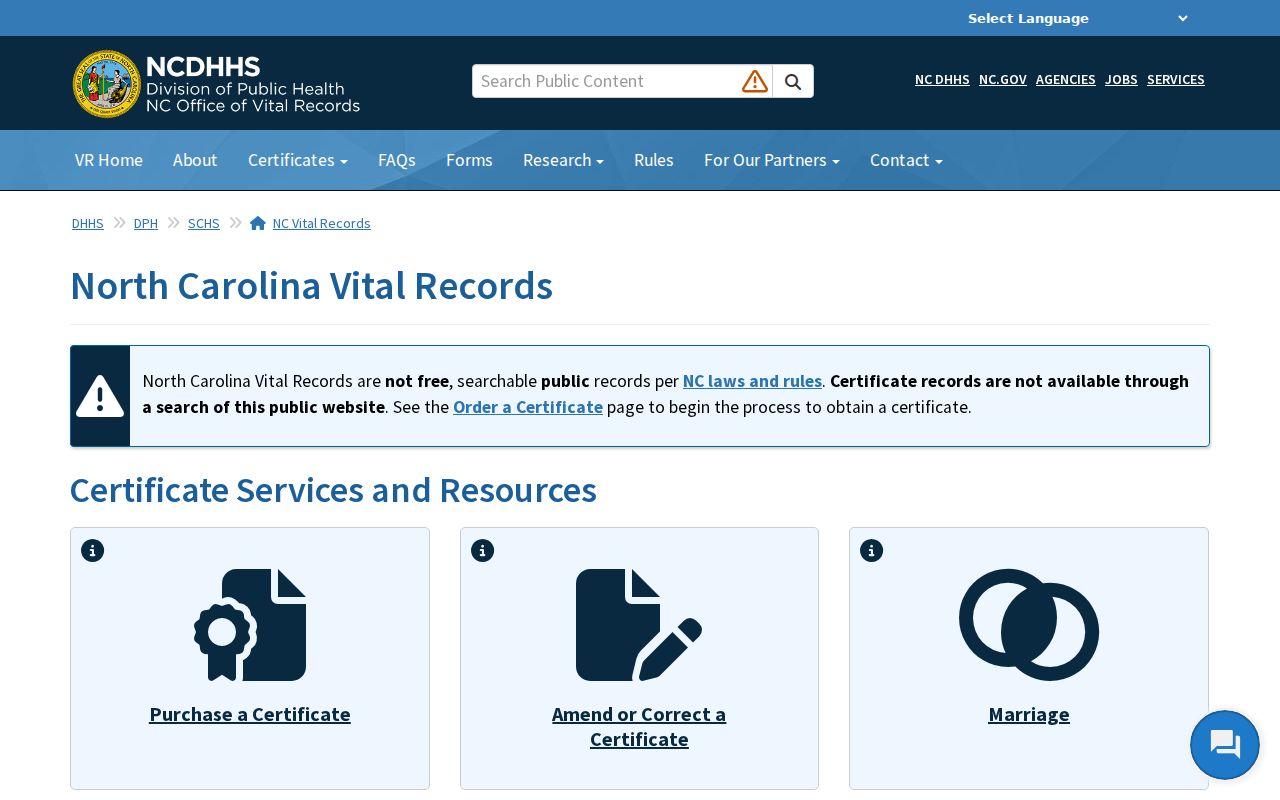
The state route can help when a Wilmington event is outside the local office’s practical service path.
Wilmington Records: Free and Custodian Access
Wilmington research often begins free online but does not end there. The tax portal, deed index, voter lookup, eCourts summaries, DigitalNC scans, and local digital archives are public starting points. A certified document, a detailed court file, restricted vital record, older deed-book context, or archive staff research may require an office visit, a defined request, an appointment, or a fee. That split is useful to know before repeating the same online search.
| Starting channel | What it provides | When another channel is needed |
|---|---|---|
| Free public index | Searchable names, dates, parcels, or document references | When an image, certification, or a gap in coverage matters |
| County or city counter | Office computers, copies, forms, and staff routing | When the public web result is partial or unavailable |
| Library or archive room | Directories, clippings, maps, microfilm, and family files | When the question is historical or address-based |
| Appointment or paid research | Special collections and remote archive help | When a collection is not digitized or needs staff retrieval |
The New Hanover fee schedule is the right place to confirm copy, certification, plat, UCC, marriage, and vital-record charges before asking an office to prepare material.
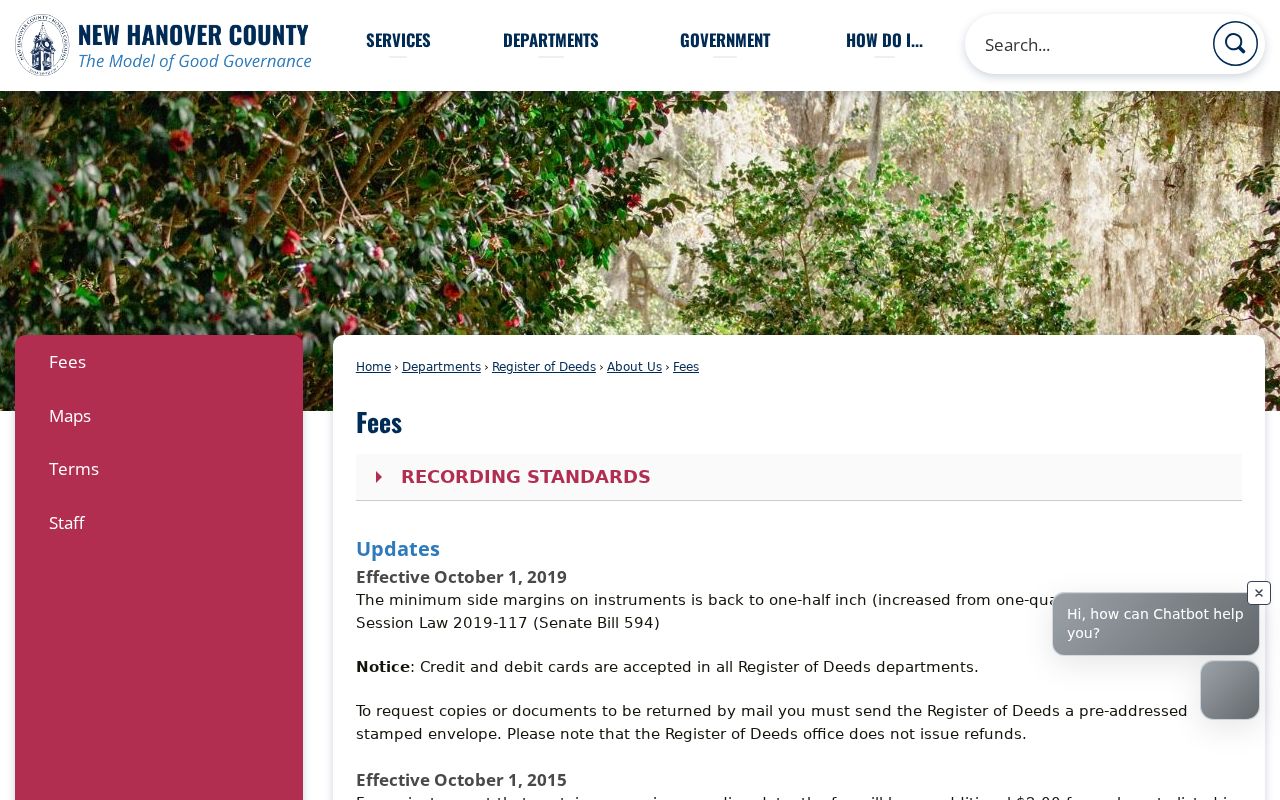
Fee categories can change by record type, so the public schedule is more dependable than a general estimate from a search result.
Note: A paid custodian service can supply an official or archival record, while a free search result may only point to it.
Wilmington Resident Records Have Limits
North Carolina’s Public Records Act, Chapter 132, opens many existing public records, but it does not require an office to create a new resident compilation. Protected voter addresses, confidential identifying fields, juvenile and sealed court material, adoption originals, medical information, driver-record addresses, and utility customer information are not ordinary resident-search tools. A county jail inquiry is also separate from the state offender locator, and a cemetery map of abandoned or neglected plots is not a complete burial database.
When an official record is wrong, send the custodian the exact parcel ID, book and page, case number, or record description with supporting information. A narrowly described Chapter 132 request can ask for an existing city or county record, but it cannot bypass a confidentiality rule.
Historical Wilmington Residents Directory Trails
For former Wilmington residents, the strongest shelf is the New Hanover County Public Library Local History Room and the DigitalNC collection. The visible city-directory span is 1860 through 1963, with irregular runs from Kelley’s 1860–61 directory through Hill’s 1963 volume. The 1897–1905 name, profession, address, and detail index is a finding aid, not a replacement for the scanned page. A directory entry can connect a name to an address, occupation, street listing, or owner-renter mark, but missing years and abbreviation keys matter.
- Parcel
- A county tax and mapping unit tied to land or an improvement, not a roster of all occupants.
- Index
- A finding tool that points to a record, sometimes without showing the complete document or image.
- Criss-cross directory
- An address-first or street-first directory arrangement used to work from a location toward listed occupants.
- Legal description
- The lot, block, subdivision, map, or boundary wording in a deed, which may differ from a modern postal address.
The Local History Room’s Bill Reaves Block Books organize newspaper clippings by address, block, and street, while related family files use surnames. Materials are noncirculating, and maps or large collections may need 24 to 48 hours for retrieval. The fuller collection runs, entry-reading method, and room rules are collected on the Wilmington city directory page.
Wilmington’s Incomplete Online Record Trail
Wilmington’s online sources are unusually useful, but no single screen is complete. The Register of Deeds has land records reaching into the 1700s and documented indexing work for 1728–2016, yet its live public index does not state one definitive online cutoff and warns that data can be partial. The library has digitized directories while keeping Block Books in the research room. eCourts presents public summaries, while the Clerk holds official copies. City code cases have an address search, while county permits route through COAST with an unverified anonymous field set.
That difference is a practical comparison, not a dead end. Take the latest confirmed parcel, legal description, document reference, case number, or directory page to the next custodian. If an early Wilmington house lacks a modern number, search its street, cross streets, owner surname, legal description, and adjacent addresses. The research route gains strength from those handoffs instead of treating one empty search box as the final answer.